
 Service Desk
Nordic Data Minds Meet: Reflections from the Nordic Data Stewardship Network´s Hybrid Seminar
The Nordic Data Stewardship Network (NDSN) gathered for its first Hybrid Seminar with around 120 registered participants altogether. The event was a clear sign that interest in data stewardship is growing steadily across the Nordic countries. The Nordic Data Stewardship Network has now been in operation for just under a year, with the goal of addressing common challenges together and promoting and supporting data stewardship in the Nordic countries.
About 40 research data enthusiasts joined us on-site at CSC premises in Espoo gathering Nordic Data Stewardship Network members together, enjoying a bright spring day and the buzz of face‑to‑face conversations. Even more people took part online, making the hybrid format essential and making discussions possible and lively across borders.
A rich mix of expertise
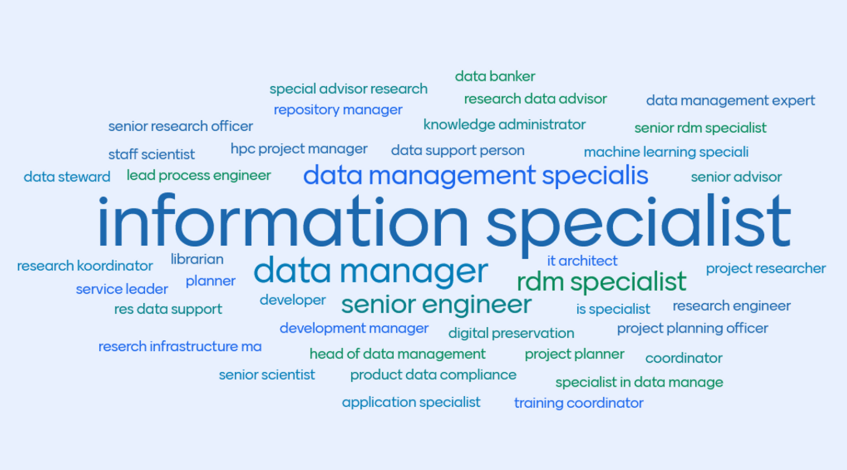
One interesting aspect of the event was the diversity of the participants. Information specialists formed the largest group, and they were joined by data managers, RDM specialists, and librarians. The participants included, among others, application specialists, coordinators, data stewards, developers, research engineers, and service managers, all bringing their own perspectives to the table.
This mix is very much at the heart of NDSN. Data stewardship is a team sport, and the seminar showcased how much stronger the conversation becomes when people from different roles and disciplines come together with a shared goal.
Keynotes: AI reality checks and seamless FAIR
The seminar, co‑organized with NeIC, offered an engaging program. The morning kicked off with two inspiring keynote talks.
Enrico Glerean from Aalto University opened with “Responsible use of Artificial Intelligence systems in research work and support”- a refreshingly balanced take on AI in research. Rather than promoting one-size-fits-all solutions, the keynote highlighted the importance of AI literacy, safer (for example, local) tools, open discussion around AI (use or non-use) and respect for academic freedom in choosing whether to engage with such tools.
The message was clear: responsible AI use starts with informed choices, not hype.
Next, Jessica Parland‑von Essen from CSC, programme manager of the Finnish EOSC Node, took the stage with the keynote “So seamless even data says: That’s FAIR.” Her talk painted a clear picture of how FAIR data management can be made almost invisible to researchers when the right structures are in place. She explored both the Finnish research infrastructure landscape ‑ highlighting shared solutions, common reference architecture work, and Open Science coordination – and the broader EU context, with a focus on federated solutions.
The takeaway? FAIR doesn’t have to feel heavy or bureaucratic; when done right, it simply works in the background.
Training data stewards and learning from each other
After a coffee break, the focus shifted to one of the key themes: data steward training. Michaela Barth and Abdulrahman Azab, both Senior Advisors at NeIC, shared experiences and discussed current needs in this area. Drawing on experience from NeIC and EOSC-Nordic, the approach emphasized a modular, training model that combines short, focused sessions with both online and in-person elements. It highlighted practical, hands-on formats while promoting sustainability through a train-the-trainer model and shared Nordic resources.
Workshops in the afternoon
The afternoon program featured interactive parallel workshops, giving participants the chance to dive deeper into specific topics.
The Nordic DMP Forum workshop focused on Data Management Plans, on themes such as the benefits of DMPs, reviewing and evaluating them, technical tools, and the perspectives of service providers and funders. Two presentations were heard in the workshop; “The VERY SLOW process towards FAIR data in Iceland by Kjartan Ólafsson, University of Iceland and “DSW and FAIR Wizard in Norway, by Federico Bianchini, University of Oslo.
The objectives of the workshop were ambitious but practical: identifying what works (and what doesn’t), sharing concrete success stories, and gathering insights that could support Nordic-level development.
Those interested in preservation joined the Building a Long‑term Preservation Service workshop. The program included a DTU case story presented by Katrine Holmstrand from the Technical University of Denmark, reflections on what should be preserved by Juuso Marttila from the University of Jyväskylä, insights into preservation services for sensitive research data at the University of Helsinki shared by Mari Elisa Kuusniemi, and an overview of the National Digital Preservation Services in Finland by Juha Lehtonen and Johan Kylander from CSC.
The workshop explored the importance of long-term preservation services, focusing on identifying essential components and considering which data is most valuable to preserve. It also addressed key challenges related to governance, technology, organization, and sustainability, while highlighting shared needs and opportunities for Nordic collaboration.
Meanwhile, the Interoperability in Services workshop focused on sharing practical approaches to implementing FAIR and interoperable research data practices, comparing perspectives on interoperability and prioritization, and identifying opportunities to strengthen collaboration among Nordic research data services. The program included a presentation on how Fairdata supports FAIR research data by Erja Kortelainen from CSC, followed by insights on prioritization in data management by Jessica Parland‑von Essen from CSC, and FAIR implementation for environmental data services presented by Hanna Koivula, also from CSC. The workshop highlighted how FAIR compliance is built into CSC´s Fairdata services, and researchers using the services do not have to take separate actions to “make” their data FAIR.
Looking ahead together (with music!)
The day wrapped up with a panel discussion reflecting on the seminar’s themes and future directions for Nordic collaboration in data stewardship. Shared infrastructure and practices were important topics, but just as important was the sense of community and the need to keep talking, sharing, and learning from one another.
While the Nordic countries differ significantly in how research data management (RDM) is resourced and implemented, there remains a strong social and cultural commitment to collaboration. Across the region, we’ve all likely experienced how Nordic cooperation tends to be straightforward, efficient, and effective. Even if we can’t solve everything at once, this shared willingness to work together is a powerful advantage we must continue to build upon.
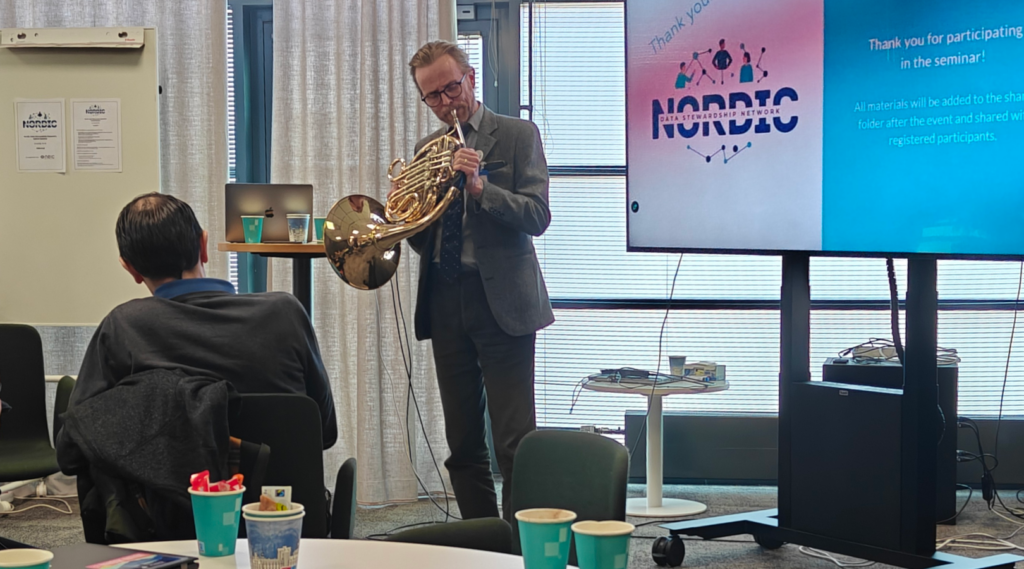
At the end of the panel NDSN Steering Group chair Kjartan Ólafsson picked up his French horn and played a short fanfare. Kjartan sent everyone home smiling.
Until next time
All in all, the NDSN Hybrid Seminar offered a valuable opportunity to connect, learn, and help shape the future of data stewardship, together in Nordic collaboration. And the journey continues: plans are already underway for the next hybrid seminar, which will take place in Iceland in May 2027. We’re looking forward to it already.
You can access the event materials and a short summary via the following link: https://kannu.csc.fi/s/yTC7MXtCQ6HbjfG
Anna-Maria Hämäläinen
Päivi Rauste