
 Service Desk
Use cases
EOSC Node Finland works closely with researchers to address real-world challenges related to research data management, data sharing, findability, and reproducibility. Through researcher-driven scientific use cases, such as SmartSMEAR and LLM data, researchers explore how EOSC services and federated European research infrastructures can help them achieve specific research goals while providing valuable feedback for the development of EOSC. Combined with cross-node collaborations involving partners such as GÉANT, EOSC Sweden, and EOSC Switzerland, these activities help address scientific and technical challenges, test the interoperability of data and services across borders, and contribute to a more connected and interoperable European Open Science ecosystem.
Long-term environmental data interoperability – SmartSMEAR
This scientific use case focuses on SmartSMEAR, a research infrastructure that provides long-term environmental observation data from the SMEAR stations. The challenge is to make complex environmental datasets easier to find, access, describe, and preserve over time. The use case explores how dynamic data snapshots, rich metadata, and shared vocabularies can improve the usability of the data for the wider scientific community. By connecting SmartSMEAR with services such as Fairdata and B2SHARE, the research infrastructure aims to increase the visibility, interoperability, and long-term value of environmental research data while supporting international initiatives, such as eLTER.
Pasi Kolari, university researcher at the University of Helsinki, says: “I am excited to explore this use case with EOSC Node Finland, as it supports the harmonization and streamlining of workflows for publishing SMEAR data across different purposes and platforms.”

Accessibility of large-scale LLM datasets – University of Turku/OpenEuroLLM
A second scientific use case is being developed together with a researcher working on large language model (LLM) and multilingual AI datasets within the OpenEuroLLM ecosystem. These datasets are extremely large, often ranging from hundreds of gigabytes to several hundred terabytes, creating challenges related to storage, transfer, discoverability, and reuse. The use case investigates how EOSC services can help researchers move data efficiently between European supercomputing environments, improve dataset citation and accessibility, and make research outputs easier for others to discover and reuse.
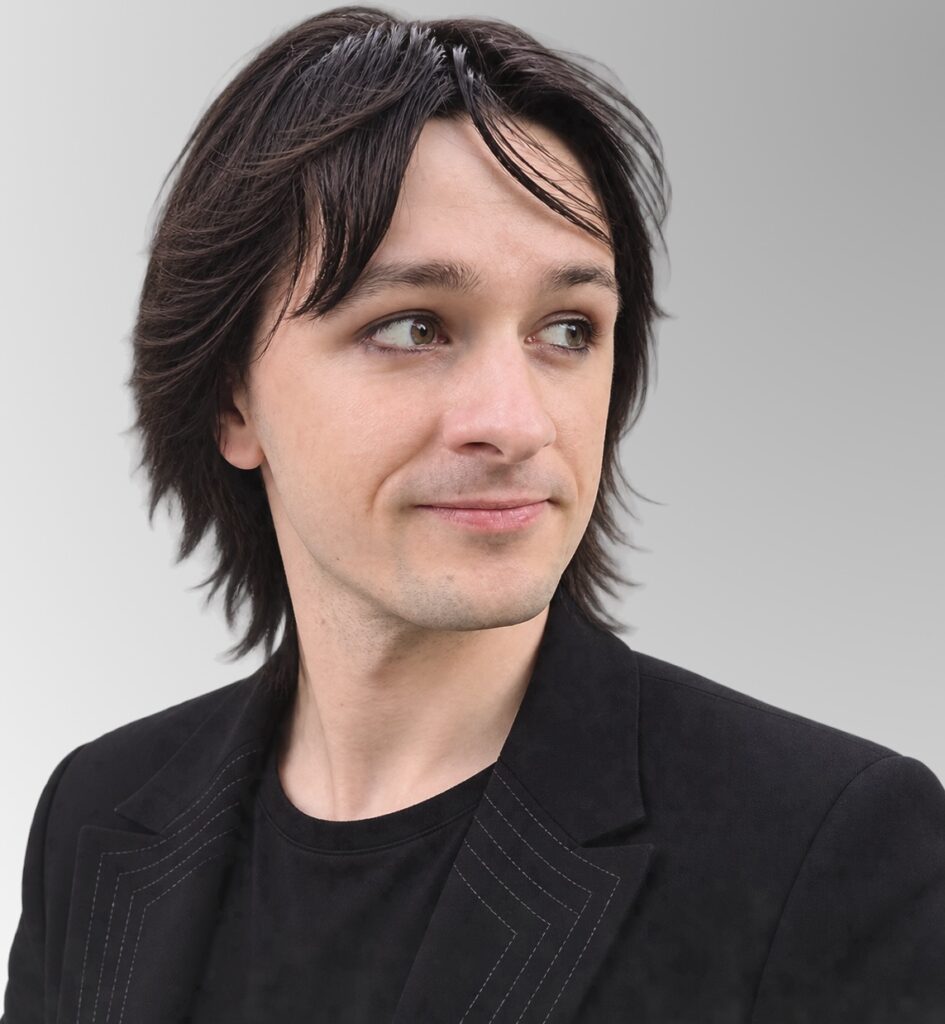
Tomasz Galica, university researcher at the University of Turku, says: “I am pleased to collaborate with EOSC Node Finland on this use case because it can make research data more accessible and supports more reproducible open research.”